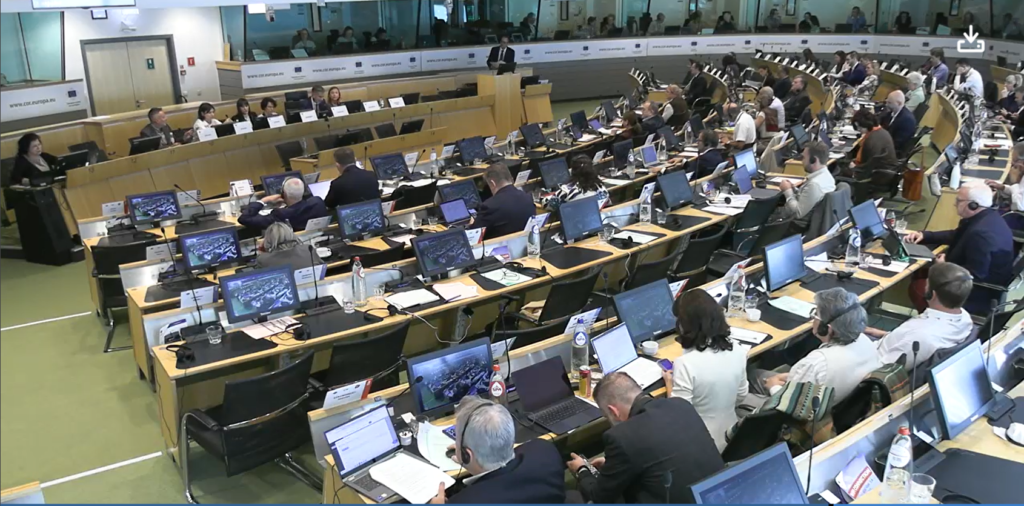
Our Director was invited by the European Committee of the Regions to speak at the Commission for the Environment, Climate Change and Energy on climate disinformation.

Drawing on his work as a Senior Lecturer in Digital Media and Sustainability at the University of Groningen and European Climate Pact Ambassador, Marc discussed how hyperconnectivity and social media can amplify climate disinformation, undermine public trust, and make it harder to build support for effective climate policies.

He also outlined three levels of action to strengthen resilience: greater platform accountability and support for independent journalism, stronger digital climate literacy through local institutions, and empowering individuals with the critical-thinking skills needed to navigate today’s complex information environment.

You can watch Marc’s intervention at this link (starting at 16 hours and 3 minutes): https://www.cor.europa.eu/en/plenaries-events/10th-meeting-enve-commission

Mahima Anand (MA student)

Mahima’s research focuses on the digital youth climate movement Fridays for Future India, examining how caste and class shape the movement’s framing of eco-justice. She further explores how communication strategies and platform dynamics influence the representation and visibility of social inequalities within the movement, particularly from a Global South perspective. 

NUCCIO LUDOVICO (Postdoctoral Fellow)

Nuccio is a postdoctoral research fellow at the Energy and Sustainability Research Institute Groningen (ESRIG), University of Groningen, and collaborates with the University of Modena and Reggio Emilia. Trained in Social Psychology, his research focuses on the analysis of large-scale social and digital trace data and combines computational social science approaches, including network analysis and natural language processing, with social-psychological perspectives to study socio-technical systems, social actors, and collective dynamics in sustainability, governance, and digital transformation contexts. 

CAROLA NEIRA-MELLADO (PhD Student)

Carola is  a PhD candidate at the Universidad de La Frontera (Temuco, Chile) and the Universidad Austral de Chile (Valdivia, Chile), pursuing a dual-degree agreement with the University of Groningen, The Netherlands.
Her dissertation,
The Protest Paradigm: An Automated Framing Analysis of Socio-Environmental Protest Coverage in Online News Media in Chile, Peru, and Mexico, 2010–2024, comparatively examines media coverage of environmental protest to explore how media representations are associated with broader policy outcomes.
Carola’s research interests include environmental protest, climate change communication and media coverage, energy transition, and environmental public policy.
Research
Coan, T., Malla, R., Nanko, M.O, Kattrup, W., Roberts J.T., Cook, J. and Boussalis, C.

Abstract

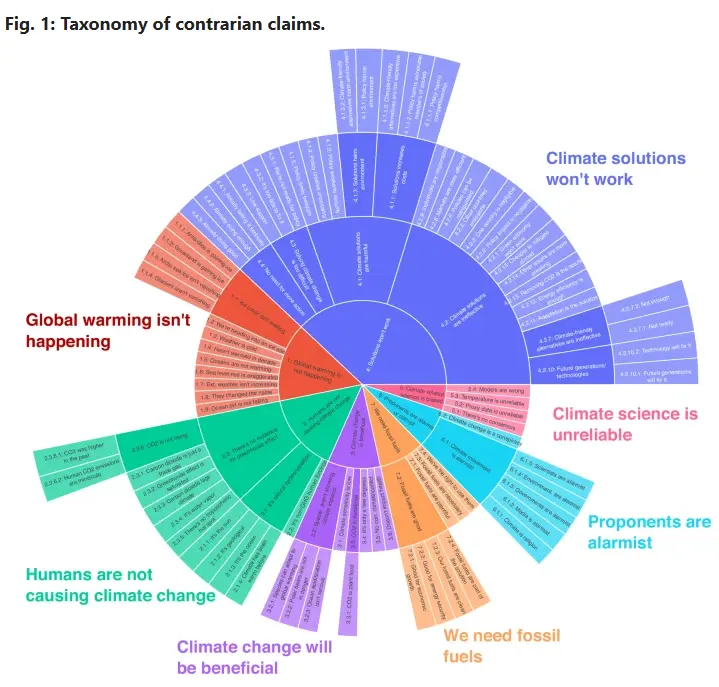
Using 30 years of Congressional floor speeches (1994–2023), we built an AI-powered system to track how — and how often — members of Congress push back on climate science and policy. A few highlights: 🔬 Updated CARDS taxonomy: We revised and extended the CARDS framework (Coan et al., 2021) to better capture solutions-focused skepticism and explicitly link contrarian claims to the “discourses of delay” identified by Lamb et al. (2020) — bridging two major frameworks in the climate communication literature. ⚙️ New method — RECoT fine-tuning: We introduce Reverse Engineered Chain-of-Thought (RECoT) fine-tuning, a procedure that teaches a smaller, scalable model to “reason” through complex, multi-label classification tasks. The result: near frontier-model accuracy at roughly 1/10th the cost — making large-scale claims classification feasible. 📊 Key findings: • Republicans are ~12x more likely than Democrats to make contrarian claims in floor speeches. • “Solutions increase costs” accounts for roughly one-third of all contrarian claims. • Contrarian speech has spiked around major climate policy moments (1997, 2009, 2015), surged during the Biden era, and was driven by a dramatic increase in discourses of delay. • More conservative Republicans, younger members, and those representing fossil fuel-dependent districts are significantly more likely to make contrarian claims.
Research
Coan, T., Malla, R., Nanko, M.O, Kattrup, W., Roberts J.T., Cook, J. and Boussalis, C.

Abstract

Using 30 years of Congressional floor speeches (1994–2023), we built an AI-powered system to track how — and how often — members of Congress push back on climate science and policy. A few highlights: 🔬 Updated CARDS taxonomy: We revised and extended the CARDS framework (Coan et al., 2021) to better capture solutions-focused skepticism and explicitly link contrarian claims to the “discourses of delay” identified by Lamb et al. (2020) — bridging two major frameworks in the climate communication literature. ⚙️ New method — RECoT fine-tuning: We introduce Reverse Engineered Chain-of-Thought (RECoT) fine-tuning, a procedure that teaches a smaller, scalable model to “reason” through complex, multi-label classification tasks. The result: near frontier-model accuracy at roughly 1/10th the cost — making large-scale claims classification feasible. 📊 Key findings: • Republicans are ~12x more likely than Democrats to make contrarian claims in floor speeches. • “Solutions increase costs” accounts for roughly one-third of all contrarian claims. • Contrarian speech has spiked around major climate policy moments (1997, 2009, 2015), surged during the Biden era, and was driven by a dramatic increase in discourses of delay. • More conservative Republicans, younger members, and those representing fossil fuel-dependent districts are significantly more likely to make contrarian claims.
Research
Coan, T., Malla, R., Nanko, M.O, Kattrup, W., Roberts J.T., Cook, J. and Boussalis, C.

Abstract

Using 30 years of Congressional floor speeches (1994–2023), we built an AI-powered system to track how — and how often — members of Congress push back on climate science and policy. A few highlights: 🔬 Updated CARDS taxonomy: We revised and extended the CARDS framework (Coan et al., 2021) to better capture solutions-focused skepticism and explicitly link contrarian claims to the “discourses of delay” identified by Lamb et al. (2020) — bridging two major frameworks in the climate communication literature. ⚙️ New method — RECoT fine-tuning: We introduce Reverse Engineered Chain-of-Thought (RECoT) fine-tuning, a procedure that teaches a smaller, scalable model to “reason” through complex, multi-label classification tasks. The result: near frontier-model accuracy at roughly 1/10th the cost — making large-scale claims classification feasible. 📊 Key findings: • Republicans are ~12x more likely than Democrats to make contrarian claims in floor speeches. • “Solutions increase costs” accounts for roughly one-third of all contrarian claims. • Contrarian speech has spiked around major climate policy moments (1997, 2009, 2015), surged during the Biden era, and was driven by a dramatic increase in discourses of delay. • More conservative Republicans, younger members, and those representing fossil fuel-dependent districts are significantly more likely to make contrarian claims.
Research
Coan, T., Malla, R., Nanko, M.O, Kattrup, W., Roberts J.T., Cook, J. and Boussalis, C.

Abstract

Using 30 years of Congressional floor speeches (1994–2023), we built an AI-powered system to track how — and how often — members of Congress push back on climate science and policy. A few highlights: 🔬 Updated CARDS taxonomy: We revised and extended the CARDS framework (Coan et al., 2021) to better capture solutions-focused skepticism and explicitly link contrarian claims to the “discourses of delay” identified by Lamb et al. (2020) — bridging two major frameworks in the climate communication literature. ⚙️ New method — RECoT fine-tuning: We introduce Reverse Engineered Chain-of-Thought (RECoT) fine-tuning, a procedure that teaches a smaller, scalable model to “reason” through complex, multi-label classification tasks. The result: near frontier-model accuracy at roughly 1/10th the cost — making large-scale claims classification feasible. 📊 Key findings: • Republicans are ~12x more likely than Democrats to make contrarian claims in floor speeches. • “Solutions increase costs” accounts for roughly one-third of all contrarian claims. • Contrarian speech has spiked around major climate policy moments (1997, 2009, 2015), surged during the Biden era, and was driven by a dramatic increase in discourses of delay. • More conservative Republicans, younger members, and those representing fossil fuel-dependent districts are significantly more likely to make contrarian claims.
Research
Coan, T., Malla, R., Nanko, M.O, Kattrup, W., Roberts J.T., Cook, J. and Boussalis, C.

Abstract

Using 30 years of Congressional floor speeches (1994–2023), we built an AI-powered system to track how — and how often — members of Congress push back on climate science and policy. A few highlights: 🔬 Updated CARDS taxonomy: We revised and extended the CARDS framework (Coan et al., 2021) to better capture solutions-focused skepticism and explicitly link contrarian claims to the “discourses of delay” identified by Lamb et al. (2020) — bridging two major frameworks in the climate communication literature. ⚙️ New method — RECoT fine-tuning: We introduce Reverse Engineered Chain-of-Thought (RECoT) fine-tuning, a procedure that teaches a smaller, scalable model to “reason” through complex, multi-label classification tasks. The result: near frontier-model accuracy at roughly 1/10th the cost — making large-scale claims classification feasible. 📊 Key findings: • Republicans are ~12x more likely than Democrats to make contrarian claims in floor speeches. • “Solutions increase costs” accounts for roughly one-third of all contrarian claims. • Contrarian speech has spiked around major climate policy moments (1997, 2009, 2015), surged during the Biden era, and was driven by a dramatic increase in discourses of delay. • More conservative Republicans, younger members, and those representing fossil fuel-dependent districts are significantly more likely to make contrarian claims.
Research
Coan, T., Malla, R., Nanko, M.O, Kattrup, W., Roberts J.T., Cook, J. and Boussalis, C.

Abstract

Using 30 years of Congressional floor speeches (1994–2023), we built an AI-powered system to track how — and how often — members of Congress push back on climate science and policy. A few highlights: 🔬 Updated CARDS taxonomy: We revised and extended the CARDS framework (Coan et al., 2021) to better capture solutions-focused skepticism and explicitly link contrarian claims to the “discourses of delay” identified by Lamb et al. (2020) — bridging two major frameworks in the climate communication literature. ⚙️ New method — RECoT fine-tuning: We introduce Reverse Engineered Chain-of-Thought (RECoT) fine-tuning, a procedure that teaches a smaller, scalable model to “reason” through complex, multi-label classification tasks. The result: near frontier-model accuracy at roughly 1/10th the cost — making large-scale claims classification feasible. 📊 Key findings: • Republicans are ~12x more likely than Democrats to make contrarian claims in floor speeches. • “Solutions increase costs” accounts for roughly one-third of all contrarian claims. • Contrarian speech has spiked around major climate policy moments (1997, 2009, 2015), surged during the Biden era, and was driven by a dramatic increase in discourses of delay. • More conservative Republicans, younger members, and those representing fossil fuel-dependent districts are significantly more likely to make contrarian claims.
Research
Coan, T., Malla, R., Nanko, M.O, Kattrup, W., Roberts J.T., Cook, J. and Boussalis, C.

Abstract

Using 30 years of Congressional floor speeches (1994–2023), we built an AI-powered system to track how — and how often — members of Congress push back on climate science and policy. A few highlights: 🔬 Updated CARDS taxonomy: We revised and extended the CARDS framework (Coan et al., 2021) to better capture solutions-focused skepticism and explicitly link contrarian claims to the “discourses of delay” identified by Lamb et al. (2020) — bridging two major frameworks in the climate communication literature. ⚙️ New method — RECoT fine-tuning: We introduce Reverse Engineered Chain-of-Thought (RECoT) fine-tuning, a procedure that teaches a smaller, scalable model to “reason” through complex, multi-label classification tasks. The result: near frontier-model accuracy at roughly 1/10th the cost — making large-scale claims classification feasible. 📊 Key findings: • Republicans are ~12x more likely than Democrats to make contrarian claims in floor speeches. • “Solutions increase costs” accounts for roughly one-third of all contrarian claims. • Contrarian speech has spiked around major climate policy moments (1997, 2009, 2015), surged during the Biden era, and was driven by a dramatic increase in discourses of delay. • More conservative Republicans, younger members, and those representing fossil fuel-dependent districts are significantly more likely to make contrarian claims.
Research
Coan, T., Malla, R., Nanko, M.O, Kattrup, W., Roberts J.T., Cook, J. and Boussalis, C.

Abstract

Using 30 years of Congressional floor speeches (1994–2023), we built an AI-powered system to track how — and how often — members of Congress push back on climate science and policy. A few highlights: 🔬 Updated CARDS taxonomy: We revised and extended the CARDS framework (Coan et al., 2021) to better capture solutions-focused skepticism and explicitly link contrarian claims to the “discourses of delay” identified by Lamb et al. (2020) — bridging two major frameworks in the climate communication literature. ⚙️ New method — RECoT fine-tuning: We introduce Reverse Engineered Chain-of-Thought (RECoT) fine-tuning, a procedure that teaches a smaller, scalable model to “reason” through complex, multi-label classification tasks. The result: near frontier-model accuracy at roughly 1/10th the cost — making large-scale claims classification feasible. 📊 Key findings: • Republicans are ~12x more likely than Democrats to make contrarian claims in floor speeches. • “Solutions increase costs” accounts for roughly one-third of all contrarian claims. • Contrarian speech has spiked around major climate policy moments (1997, 2009, 2015), surged during the Biden era, and was driven by a dramatic increase in discourses of delay. • More conservative Republicans, younger members, and those representing fossil fuel-dependent districts are significantly more likely to make contrarian claims.